Equipment for Hiking in Norway: What to Bring for Safe and Comfortable Hiking


Choosing the right equipment for hiking in Norway is less about technical mountain gear and more about understanding how Norwegian terrain and coastal weather systems actually behave.
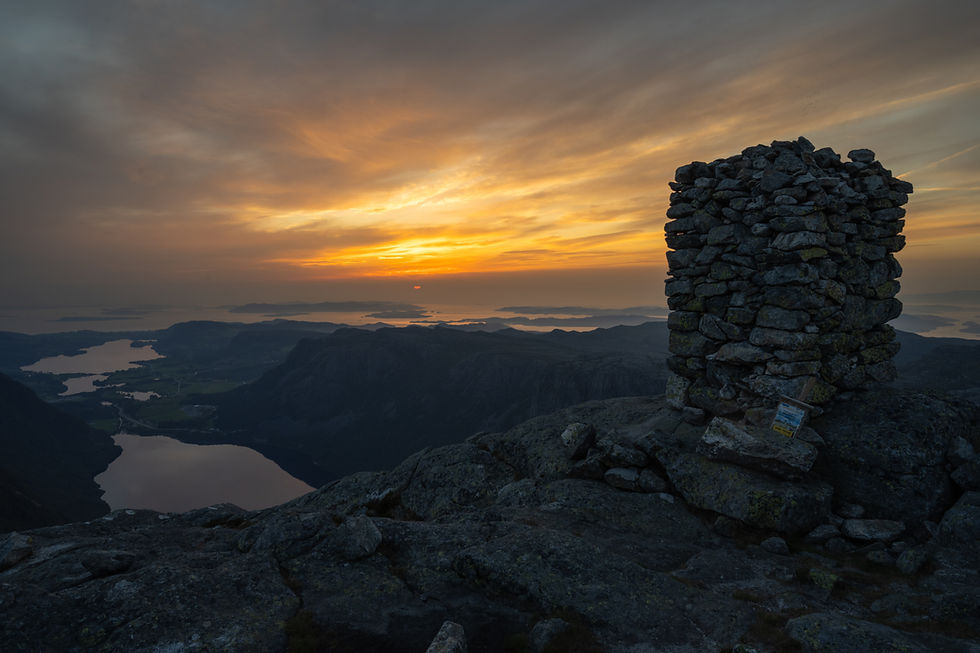
In western Norway - including the Stavanger region - hiking conditions are shaped by exposed granite, wind coming in from the North Sea, and rapidly shifting microclimates. Elevation is rarely extreme compared to alpine regions, but footing can be uneven, rock surfaces often remain damp long after rainfall, and wind exposure can change how a route feels within minutes.
This combination is easy to misread at first glance. Norway’s mountains may not look dramatic in altitude, yet the real challenge is not height. It is surface grip, weather variability, and temperature regulation over several hours of movement.
The purpose of proper hiking equipment in Norway is therefore straightforward: to create stability, regulate body temperature, protect against wind and moisture, and maintain steady energy throughout the hike.
When these elements are in balance, hiking in Norway feels calm, controlled, and rewarding rather than physically demanding.
Equipment for Hiking in Norway Starts With Understanding the Terrain
Before choosing gear, it is essential to understand what Norwegian terrain actually involves. Gear decisions only make sense when they reflect real surface conditions rather than assumptions based on elevation or mountain size.
For an overview of how terrain varies across the region, see Best Hiking Trails Near Stavanger – A Local Guide to Scenic and Quiet Routes
In western Norway, including the coastal mountains around Stavanger, hikers commonly encounter large stretches of smooth granite slab, natural stone staircases built into the landscape, root-covered forest paths, and sections of boggy or waterlogged ground - even during stable summer weather. Trails often transition quickly from sheltered woodland to exposed ridgelines where wind can significantly affect balance and perceived temperature.
Unlike alpine hiking, where altitude and snowfields are often the defining challenges, hiking in Norway is shaped more by friction, surface grip, and exposure to wind and moisture. The terrain demands steady footing, controlled movement on rock, and an ability to adapt to changing conditions over the course of several hours.
This terrain context influences every smart equipment choice - from footwear and layering systems to backpack weight and weather protection.
Footwear: The Foundation of Equipment for Hiking in Norway
If one single decision has the greatest impact on comfort and safety, it is footwear. More than jackets or backpacks, the right shoes define how secure and confident you feel on Norwegian terrain.
Footwear is the true foundation of safe hiking in Norway, because much of the landscape is shaped by rock rather than soil. Stability and surface grip matter more than lightness alone.
Why Grip Matters More Than Weight
Granite - common throughout western Norway - becomes surprisingly slippery when damp. Even after several dry days, shaded rock slabs can retain moisture. Tree roots, compact soil, and natural stone steps also become slick under light rain or morning dew.
Because of this, traction is more important than minimal weight. A few hundred grams saved in footwear rarely compensates for reduced stability on wet rock. Controlled footing and secure descents are what reduce fatigue and prevent minor slips from becoming injuries.
Hiking Boots: Stability and Protection
For most conditions and for most hikers, hiking boots remain the most versatile and reliable choice of equipment for hiking in Norway.

Well-constructed boots provide structural ankle support on uneven ground, protection against sharp rock edges and roots, and improved insulation during cooler months. They also create a more stable platform on descents, where many minor accidents occur.
Boots are particularly valuable in spring and autumn, when trails are often damp and temperatures fluctuate throughout the day. The added stability often increases confidence, especially for hikers unfamiliar with Norwegian rock surfaces.
The main disadvantages are additional weight and reduced breathability during warm summer days. However, in mixed or uncertain conditions, the stability they provide typically outweighs those concerns.
Trail Shoes: When They Work
Trail shoes can perform very well in stable summer weather, especially on established routes with predictable surfaces.
Their advantages include lighter weight, greater breathability, increased flexibility, and easier travel packing. For experienced hikers who are accustomed to uneven terrain, trail shoes can feel efficient and responsive.
However, they provide less ankle stability and less protection against sharp or irregular rock. As terrain becomes wetter, more technical, or as fatigue increases later in the hike, this difference becomes more noticeable.
The most practical guidance remains simple: if you are uncertain about conditions or your own preference, choose stability over minimalism when selecting footwear as part of your equipment for hiking in Norway.
Clothing: Regulation, Not Warmth
A common misconception about hiking conditions in Norway is that it must focus primarily on heavy insulation. In reality, effective temperature regulation is far more important than simply staying warm.
Norwegian hiking conditions - particularly in western and coastal regions - often involve moderate air temperatures combined with wind exposure and fluctuating activity levels. The challenge is rarely extreme cold. It is managing heat, moisture, and wind at the right moments.
The Real Challenge: Managing Transitions
Most day hikes involve continuous environmental and physical transitions. Trails frequently shift from sheltered forest to exposed ridgelines. Movement alternates between steady walking and longer rest stops. Calm air can quickly turn into wind gusts. Stable conditions may shift to brief rain showers without warning.
During uphill sections, the body generates significant heat and moisture. Within minutes of stopping, especially in wind-exposed areas, that heat dissipates rapidly. This cycle of warming and cooling is what defines comfort on a Norwegian hike.
A well-designed clothing system as part of your equipment for hiking in Norway allows you to respond efficiently to these transitions. Layers should be easy to add or remove, breathable during movement, and protective when exposed. The goal is controlled regulation - staying dry while active and retaining warmth when stationary - rather than relying on heavy insulation alone.
The Layering System Explained Properly
A structured layering system is one of the most important components of equipment for hiking in Norway. Each layer serves a distinct function, and together they allow you to regulate temperature efficiently in changing coastal conditions.

Base Layer: Moisture Control
The base layer sits directly against your skin. Its primary function is not insulation, but moisture management. Keeping sweat away from the skin reduces cooling during rest stops and limits friction that can lead to discomfort.
Merino wool is highly effective for hiking in Norway because it regulates temperature well across varying activity levels and resists odor during long days outdoors. Synthetic fabrics, on the other hand, typically dry faster and offer greater durability under repeated use.
Cotton should be avoided in Norwegian hiking conditions. Once wet, it retains moisture and accelerates heat loss, especially in wind-exposed sections.
Mid Layer: Insulation That Breathes
The mid layer provides insulation by trapping air close to the body. Its role is to preserve warmth when needed while still allowing moisture to move outward.
Fleece remains one of the most versatile mid-layer options. It breathes well, dries quickly, and continues to provide insulation even if slightly damp. These properties are particularly valuable in western Norway, where humidity and wind exposure can fluctuate throughout the day.
Lightweight insulated jackets offer greater warmth relative to weight. Down insulation performs best in dry conditions and provides excellent compressibility. Synthetic insulation is often more reliable in wet or variable weather, maintaining warmth even when exposed to moisture.
An effective mid layer should be easy to remove and pack quickly. Frequent adjustments are normal when hiking in Norway.
Outer Layer: Wind Protection Is Critical
Wind exposure often defines comfort more than rainfall in western Norway. Even moderate wind can significantly increase heat loss, especially during breaks or on exposed ridgelines.
A lightweight waterproof shell jacket is therefore essential equipment for hiking in Norway - including during summer months. The shell layer serves two primary purposes: blocking wind and preventing external moisture from reaching inner layers.
A breathable membrane is important. It allows internal moisture to escape while protecting against rain and wind, preventing overheating during movement while maintaining protection when conditions change.
In Norwegian hiking conditions, the outer layer is less about heavy rainstorms and more about consistent protection against wind-driven cooling.
Small Items That Make a Big Difference
Headwear and gloves are rarely discussed when planning hiking gear, yet they can significantly influence comfort in western Norway.
Wind exposure along ridgelines increases heat loss rapidly, even when air temperatures feel moderate. A lightweight beanie or buff takes minimal space in a backpack but can dramatically improve comfort during breaks or in shifting weather.
Thin gloves are often useful in spring and autumn, particularly when wind combines with damp air. They are less about extreme cold and more about maintaining dexterity and preventing unnecessary cooling during rest stops.
These small additions are not always required, but they provide flexibility. In variable coastal conditions, small adjustments often matter more than heavy insulation.
Base Layer for the Legs: When to Use Long Underwear (Stilongs)
When choosing equipment for hiking in Norway, flexibility is often more valuable than insulation alone. This is especially true for leg layers, where temperature can change quickly depending on wind exposure, terrain, and pace.
For shoulder seasons or cooler days, long underwear (stilongs) can significantly improve comfort. However, traditional thermal leggings require you to remove boots and trousers in order to adjust them - which is impractical on the trail.
A more adaptable solution is long underwear with full-length side zippers. These can be put on or removed without taking off shoes or trousers, making them highly functional in changing conditions. If temperatures rise during a climb, the layer can be removed quickly. If wind increases on an exposed ridge or during a long break, it can be added again within minutes.
This type of adjustable base layer is particularly useful as part of equipment for hiking in Norway, where hikes often involve transitions between sheltered forest and exposed terrain. Rather than committing to one insulation level for the entire day, zip-off thermal layers allow dynamic temperature regulation.
For best performance, choose lightweight merino or synthetic versions rather than heavy materials. The goal is not bulk, but controlled adaptability.
In variable Norwegian conditions, the ability to adjust without interrupting the flow of the hike is often what defines comfort.
Trousers: Mobility and Drying Speed
When considering equipment for hiking in Norway, trousers rarely get as much attention as jackets or boots. Yet they play an important role in comfort, mobility, and moisture management - especially on rocky and uneven terrain.

Hiking in western Norway frequently involves stepping up natural stone formations, balancing on granite slabs, and navigating sections of damp forest trail. For this reason, trousers should prioritize freedom of movement and efficient drying rather than heavy insulation.
The most suitable hiking trousers for Norwegian conditions typically offer stretch for unrestricted movement, quick-drying fabrics that handle light rain or wet vegetation, and durability against repeated contact with rock surfaces. Reinforced areas around the knees and seat can increase longevity without adding unnecessary weight.
Heavy, insulated trousers are rarely necessary outside winter conditions. During most of the hiking season, overheating is more likely than underheating while in motion. Breathable fabrics that regulate temperature effectively are therefore preferable to thick materials.
Rain pants can be valuable when forecasts are unstable or wind-driven showers are likely. However, they are not always required for typical summer hikes. As with most equipment for hiking in Norway, the key is adaptability rather than excess.
Backpack: Balanced Capacity
Selecting the right backpack is less visible than choosing boots, yet it affects balance and fatigue more than many expect. Capacity should match the duration and conditions of the hike - not a desire to carry “just in case” items.
For most day hikes in western Norway, a backpack in the range of 20–30 liters is sufficient. This size allows you to carry essential layers and supplies without creating unnecessary weight or imbalance on uneven terrain.
Capacity should reflect terrain and route choice - especially when choosing the right hike near Stavanger.
Your pack should comfortably accommodate an extra insulating mid layer, a waterproof shell jacket, sufficient water, energy-rich snacks, and a compact safety kit. These items form the functional core of responsible equipment for hiking in Norway, especially in regions where weather can shift quickly.
Fit and load distribution are just as important as capacity. A well-fitted pack with adjustable shoulder straps, chest strap, and hip support improves balance on rocky surfaces and reduces strain during longer ascents. Proper weight distribution also enhances stability on descents, where fatigue can affect footing.
Overpacking increases fatigue and alters balance, particularly on granite slabs and uneven stone steps. Underpacking, however, limits your ability to adapt to changing weather or extended breaks. The goal is measured preparedness - enough flexibility to respond to conditions, without unnecessary load.
Smart packing reflects awareness of terrain and weather patterns rather than fear of uncertainty.
Hiking Poles: Useful or Unnecessary?
Hiking poles are not traditionally common among Norwegian hikers, yet many international visitors prefer to use them.
In Norwegian terrain, poles can provide additional stability on long descents and reduce strain on knees, particularly on sustained downhill sections such as Pulpit Rock. They may also help maintain rhythm on longer routes.
However, on smooth granite slabs, poles offer limited traction compared to proper footwear. If the surface is wet, rubber tips can slide, and technique becomes more important than equipment.
For experienced hikers with stable footing, poles are often optional. For those who appreciate additional balance support - especially on descents - they can be useful.
As with most equipment choices in Norway, the value of poles depends on terrain, weather, and individual preference.
Hydration and Energy Management
Hydration and energy management rarely receive the same attention as footwear, yet they influence safety and performance more than most visible gear.

Cool coastal temperatures can mask fluid loss. In western Norway, hikers may not feel overheated, but steady movement over several hours still leads to gradual dehydration. Wind exposure can further increase fluid loss without obvious signs.
For most day hikes, carrying sufficient water and drinking consistently is more effective than waiting until thirst becomes noticeable. Smaller, regular intake supports stable energy levels and clearer decision-making.
Energy management follows the same principle. Rather than relying on large, infrequent meals, steady consumption of lightweight, energy-dense snacks helps maintain balance and coordination over time. Blood sugar fluctuations contribute to fatigue, and fatigue increases risk more reliably than terrain difficulty itself.
As part of responsible equipment for hiking in Norway, hydration and nutrition should be treated as performance tools rather than afterthoughts. Stable energy allows controlled movement, better footing on rock, and more confident decision-making in variable weather conditions.
Navigation in Norwegian Terrain
Navigation is a critical part of safe hiking in Norway, especially in coastal and mountain areas where visibility and weather can shift quickly.
Although many popular routes are marked, fog, low cloud cover, and sudden weather changes can reduce orientation within minutes. On exposed granite or open plateaus, trail markings may become harder to distinguish when light flattens contrast or moisture darkens rock surfaces.
Mobile phones are useful navigation tools, but they have limitations in Norwegian conditions. Coverage can be inconsistent in remote valleys or behind ridgelines, and wet weather combined with cold fingers can make touchscreens unreliable. Moisture on the screen or reduced battery performance in low temperatures can render a phone temporarily unusable at exactly the moment you need it.
For this reason, a dedicated handheld GPS device remains a reliable component of equipment for hiking in Norway. GPS units are built to function in wet conditions, tolerate low temperatures, and operate independently of mobile network coverage. After experiencing situations where phone-based navigation failed in fog and wet weather, many experienced hikers choose to carry a GPS device as standard backup.
Independent hikers should therefore think in terms of redundancy: offline maps, backup power, and a secondary navigation method that does not depend on cellular coverage.
Topographic awareness and clear turnaround plans are equally important. In Norwegian terrain, the ability to adapt to visibility changes and environmental uncertainty often matters more than the sophistication of the device itself. Reliable navigation supports calm decision-making - which is ultimately the most important part of safe hiking.
If you want a deeper explanation of how route decisions are made in variable conditions, see Private Guided Hiking in Stavanger – What to Expect
First Aid: Practical Preparedness
First aid is less visible than boots or jackets, yet equally important. The goal is not to prepare for extreme emergencies, but to be ready for the situations that are statistically most likely on a day hike.
In Norwegian terrain, the most common issues are blisters, minor cuts from rock or vegetation, and temporary chilling during longer breaks or unexpected delays. Steep descents on granite slabs can increase friction inside footwear, and damp conditions can accelerate skin irritation. Addressing small problems early prevents them from developing into larger disruptions.
A practical day-hike first aid kit should therefore prioritize blister treatment, adhesive bandages, antiseptic wipes, and any necessary personal medication. Lightweight gloves for wound care and basic pain relief can also be sensible additions.
An emergency blanket deserves particular mention. It weighs very little yet provides significant thermal protection if movement stops unexpectedly due to injury, fatigue, or weather shifts. In wind-exposed environments, retaining body heat quickly becomes a priority.
Effective first aid as part of equipment for hiking in Norway is about proportion and realism. Overly large kits add unnecessary weight, while thoughtful minimal preparation increases confidence. Preparedness reduces stress - and reduced stress allows you to focus on the landscape rather than potential problems.
Seasonal Variability and Equipment for Hiking in Norway
Seasonal change has a direct impact on equipment for hiking in Norway, but calendar months alone are unreliable indicators of actual trail conditions. Coastal weather systems, wind direction, and recent precipitation often matter more than the date.
Summer
During stable summer periods, lighter setups are often sufficient. Trail shoes can work well on dry routes, and lightweight layering is typically adequate while in motion. However, even in July, wind exposure on ridgelines can lower perceived temperature quickly. A waterproof shell jacket remains essential equipment for hiking in Norway year-round, including summer.
Rock surfaces may still be damp after rain, and shaded forest sections can retain moisture. Summer does not eliminate the need for grip and weather awareness.
Spring and Autumn
Spring and autumn bring greater variability. Temperatures fluctuate more widely between morning and afternoon, and trails are more likely to be wet. Hiking boots are generally recommended during these seasons due to improved stability and insulation.
Warmer mid layers become more important, particularly during breaks or on exposed terrain. Gloves and a hat are often useful additions, even if they are removed after the initial ascent. Wind exposure can increase heat loss significantly once movement slows.
Increased rainfall also means a higher likelihood of wet rock and muddy sections. Adjusting equipment for hiking in Norway during these transitional seasons is largely about anticipating moisture and temperature shifts.
Winter (Variable Conditions)
Winter conditions vary greatly depending on elevation and recent weather patterns. Some lower-elevation routes may remain accessible with appropriate layering, while higher terrain can require traction devices such as microspikes.
Insulated layers become more important during rest periods, and route selection requires greater caution. Daylight hours are shorter, and visibility can change rapidly.
Across all seasons, the key principle remains consistent: weather patterns, wind exposure, and recent precipitation define conditions more accurately than the calendar. Adapting your equipment to real-time forecasts is more important than relying on seasonal assumptions.
What You Do Not Need
When discussing hiking gear for Norway, it is equally important to clarify what is unnecessary.
Many visitors assume that Norway’s dramatic landscapes require technical mountaineering equipment. In reality, most established hiking routes in western Norway are non-technical and do not require specialized alpine gear.
For standard day hikes, you generally do not need climbing equipment, large expedition backpacks, or technical alpine hardware. Helmets, harnesses, ropes, and heavy-duty mountaineering boots are not part of typical hiking setups on marked trails.
Oversized packs are also rarely appropriate for day hikes. They add unnecessary weight, shift balance on uneven terrain, and increase fatigue without improving safety.
Effective equipment for hiking in Norway focuses on stability, weather protection, and controlled movement - not on extreme or specialized gear. Norwegian hiking rewards balance, preparation, and situational awareness far more than technical equipment.
FAQ: Equipment for Hiking in Norway
What equipment is essential for hiking in Norway?
Essential equipment for hiking in Norway includes stable footwear with good grip, a functional layering system, a waterproof shell jacket for wind protection, sufficient water, and energy-rich snacks. Terrain awareness and adaptability are often more important than heavy technical gear.
Do I need hiking boots for Norway?
Hiking boots are recommended in spring, autumn, and on uneven or wet terrain. In stable summer conditions, experienced hikers may prefer trail shoes. The key factor is grip and stability on granite and rocky surfaces.
Is waterproof clothing necessary for hiking in Norway?
Yes. A lightweight waterproof shell jacket is essential, even in summer. Wind exposure can significantly increase heat loss, and weather conditions can change quickly in western Norway.
Can I hike in Norway in summer without heavy gear?
Yes. Most summer hikes do not require heavy insulation or technical mountaineering equipment. However, proper footwear, layering, and weather protection remain important for comfort and safety.
What should tourists avoid bringing when hiking in Norway?
Tourists should avoid heavy expedition gear, cotton clothing, oversized backpacks, and technical mountaineering equipment on standard hiking routes. Most hikes in Norway require stability, weather protection, and adaptability — not specialized alpine gear.
Final Reflection: What Equipment for Hiking in Norway Really Means
The right equipment for hiking in Norway is not about carrying more. It is about carrying what supports controlled movement and calm decision-making.

On granite slabs, stability matters. On exposed ridgelines, wind protection matters. During long ascents and quiet breaks, temperature regulation matters. Over several hours, steady energy matters.
When those elements are aligned, hiking in Norway feels balanced rather than demanding. The terrain becomes something you move through with confidence - not something you fight against.
Norwegian landscapes do not require extreme endurance or technical complexity. They require preparation, awareness, and respect for changing conditions.
If you want help choosing the right route for the conditions - and ensuring your setup matches the day - you can read the Ultimate Guide to Private Hiking Tours in Stavanger.
On guided hikes in Stavanger, route and equipment decisions are adjusted in real time based on wind exposure and surface conditions.
Preparation begins with understanding the terrain. The right equipment simply supports that understanding.
Calm. Personal. Real

Comments