Deep Water vs Shallow Water Fjord Fishing in Stavanger - What’s the Difference?

Updated: Apr 23
When planning a private fjord fishing tour in Stavanger, many guests naturally focus on species. Yet depth often shapes the experience just as much.

The fjords around Stavanger are defined by quiet transitions - from sheltered bays and sandy flats to kelp-lined shore and deeper basins that fall away along steep underwater edges. In some places the seabed slopes gradually. In others it drops quickly into darker water where structure becomes more pronounced.
These shifts do more than influence which fish may be present. They shape the rhythm of the day, the techniques used and the atmosphere on the water itself.
Deep water vs shallow water fjord fishing in Stavanger is not simply about depth, but about how habitat shapes technique and experience.
Deep Water vs Shallow Water Fjord Fishing in Stavanger
Shallow water fishing in Stavanger typically unfolds in depths from only a few meters down to around 20–30 meters. These zones often include sandy bottom, kelp forests and gentle transitions close to shore.

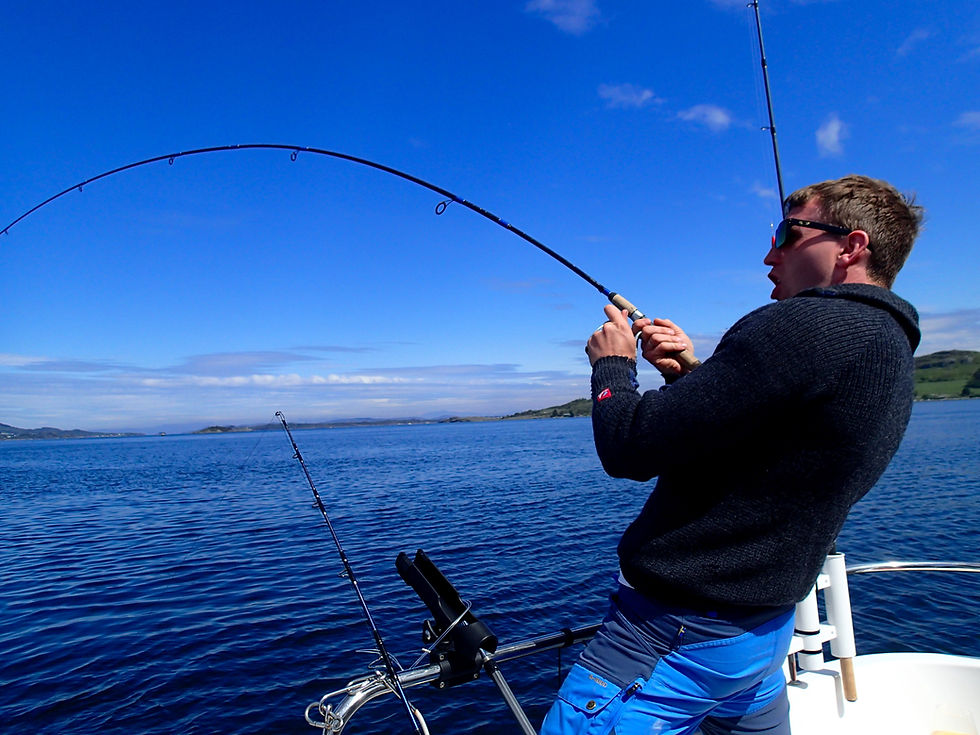
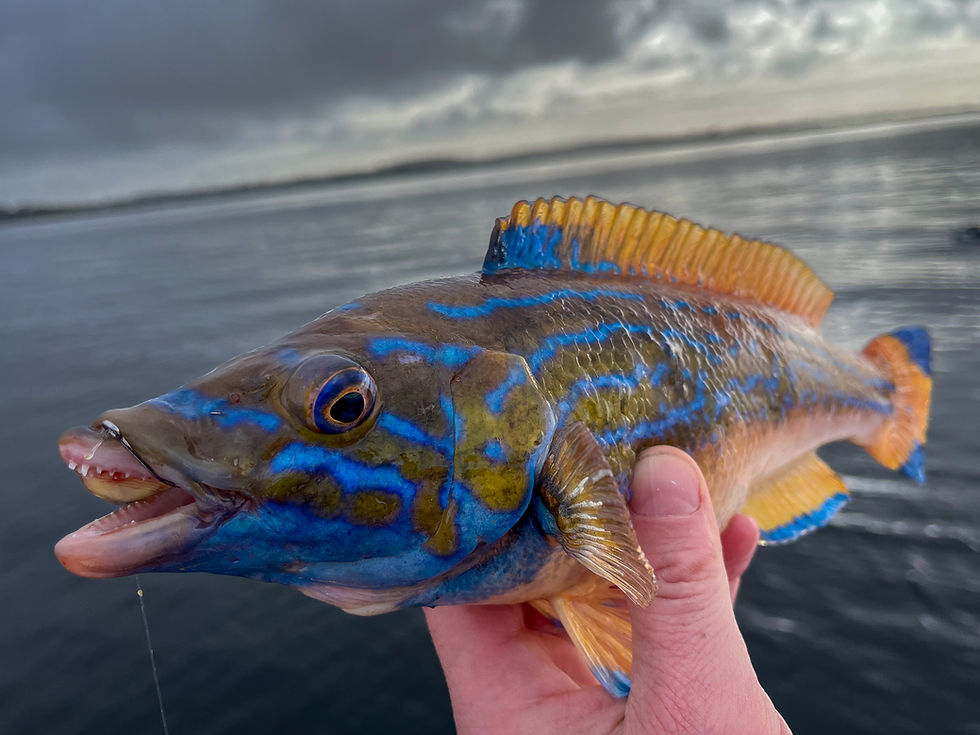
Fishing here tends to be slower and more deliberate. Pollack may hold tight to rocky edges. Wrasse move methodically through kelp. Flatfish lie almost motionless against sandy bottom. Cod often travel along subtle slopes where shallow water meets deeper structure.
Because light penetrates more easily and seabed variation is pronounced, small adjustments in drift, depth and presentation become more important than power. Precision matters more than force.
During spring and early summer, as water temperatures rise, activity often increases in these shallower areas. The result is a style of fjord fishing in Stavanger that feels close to the landscape - technical, observant and quietly rewarding.
Deep Water Fjord Fishing in Stavanger
In the Stavanger region, deeper fjord areas may extend from 40 meters to well beyond 200 meters, depending on location. These zones are often found along steep underwater edges or within broader basins where tidal movement becomes more defined.
Fishing here feels more vertical and controlled. Presentation takes place directly beneath the boat, and positioning becomes deliberate rather than incidental. Cod and saithe may hold along structured drop-offs, while occasional deeper species appear where current gathers along terrain changes.
Depth alone, however, does not create opportunity. It offers a different habitat - one shaped by current, contour and seasonal pattern rather than proximity to shore.
Deep water fjord fishing in Stavanger is not about going further down. It is about understanding what the deeper structure represents.
How Depth Changes the Experience
The difference between shallow and deep water fishing in Stavanger is not only biological - it shapes the entire atmosphere of the day.
In shallow water, the landscape remains close and present. Shoreline features are visible. Subtle bottom transitions can often be anticipated by what you see above the surface. Movement tends to be slower, and adjustments feel immediate and tangible. The connection between seabed and surface is easier to sense.
In deeper water, the experience becomes more abstract. The shoreline recedes. Attention shifts downward. Structure is no longer visible, only interpreted - through contour lines, current direction and electronic feedback. Positioning becomes more deliberate, and small changes in drift angle can matter significantly.
This shift influences not only technique, but focus. Shallow fishing often feels exploratory and intuitive. Deeper fishing demands concentration and interpretation.
On a private fjord fishing tour in Stavanger, neither approach is predetermined. Wind direction, tidal movement, season and group preference guide the choice. Some days begin over deeper structure before transitioning to shoreline terrain. Other days remain in one habitat where conditions align.
Depth does not simply change where you fish. It changes how you read the fjord.
Why Flexibility Matters More Than Depth
It is natural to ask which is better - deep or shallow water fishing.
In practice, fjord fishing in Stavanger depends less on depth itself and more on understanding habitat. Wind direction, tidal flow, seabed structure and seasonal movement influence fish positioning far more than the number displayed on a depth gauge.
Depth is only one variable within a larger coastal system.
This is where private guiding becomes essential. Rather than committing to a fixed plan, the day adapts. If current strengthens, positioning shifts. If wind changes direction, the route adjusts. If fish hold along transitional structure, time is given to work the area properly.
The environment leads. The decisions follow.
For a broader understanding of how private fjord fishing tours in Stavanger are structured - including species, seasons and suitability - you can explore:
Conclusion
Depth is not a shortcut to success. It is one part of a living coastal system.
Fjord fishing in Stavanger unfolds across both shallow bays and deeper basins, each offering a distinct rhythm and learning opportunity. Some days call for careful work along shoreline structure. Others reward deliberate positioning over deeper terrain. The value lies not in choosing one permanently, but in knowing when to move between them.
On a private fjord fishing tour in Stavanger, that flexibility shapes the entire experience. The environment sets the conditions. The guide adapts. The day unfolds naturally.
Understanding depth does not complicate fjord fishing. It clarifies it.
Calm. Personal. Real.

Comments