What Fish Can You Catch on a Private Fjord Fishing Tour in Stavanger?

Updated: May 18
If you are considering a private fjord fishing tour in Stavanger, one of the first questions that naturally arises is simple: what fish can you actually expect to catch?

The answer is not a fixed species list, but an environment.
Fjord fishing in Stavanger takes place within sheltered coastal waters where depth, seabed and tidal movement shape fish behaviour more than ambition does. Unlike offshore fishing in northern Norway, where migration peaks and volume often define expectations, fjord fishing here is defined by habitat, season and subtle shifts in current.
On a private fjord fishing tour in Stavanger, the aim is not to chase a single trophy species. It is to read the fjord as it is on that particular day - and to adapt to what it naturally offers.
The Coastal Setting Around Stavanger
The fjords surrounding Stavanger form a sheltered coastal network of islands, narrow channels and shifting depth transitions. What appears calm from the surface often hides subtle changes below.
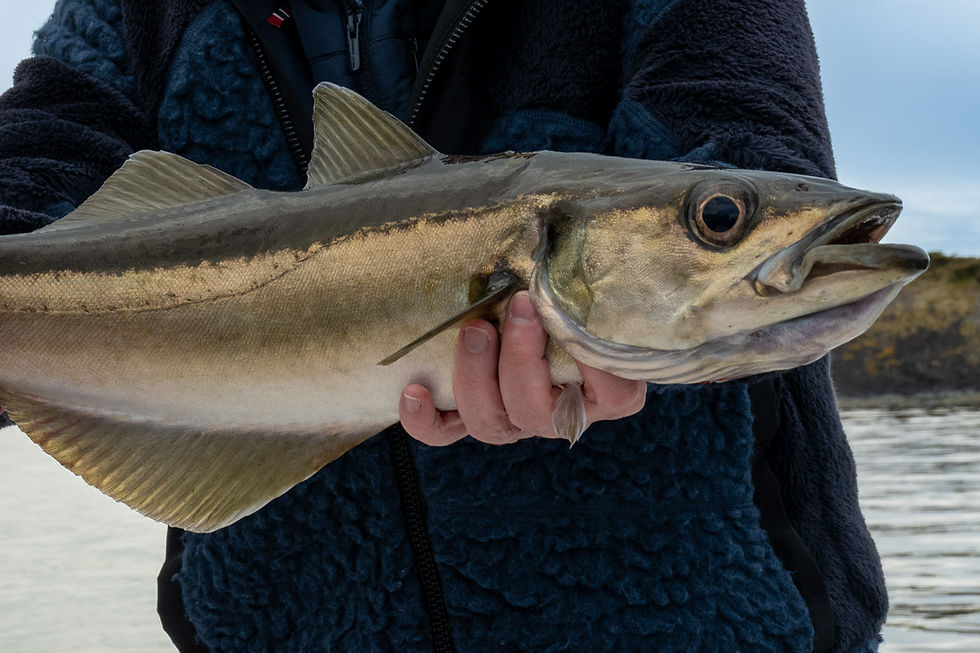
Fishing with Stavanger Adventure is private, calm and tailored to both beginners and experienced anglers looking for a more authentic Norwegian fishing experience.
In some areas, rocky shoreline drops quickly into structured terrain where ledges and slopes create natural holding points for predatory fish. In others, the landscape opens into sandy basins where current slows and the seabed softens, supporting a different mix of species.
This variation in terrain explains why fish distribution changes over short distances. Water temperature, tidal flow and the movement of baitfish influence how species position themselves from day to day. Even modest changes in current or light can alter activity levels.

Combined with calm fjord conditions and beautiful coastal scenery, this makes Stavanger fishing both exciting and accessible for beginners, families and experienced anglers alike.
Because these waters are protected rather than exposed to open-ocean swell, fishing in Stavanger’s fjords is typically calmer and more accessible than offshore formats. Shorter travel distances and sheltered positioning make it particularly well suited to beginners, families and those who value a more adaptive pace.
If you would like to understand in more detail how wind direction and tidal movement shape these patterns, you can explore → How Weather, Wind and Tides Influence Fjord Fishing in Stavanger
Cod - A Familiar Presence in Stavanger Fjords
Cod are among the most commonly encountered species in the fjords around Stavanger. They are well adapted to the sheltered coastal environment and can be present throughout much of the year, particularly near structured seabed, rocky slopes and along drop-off edges where depth transitions create natural feeding zones.

In Stavanger’s fjords, cod are often found in moderate depths rather than extreme offshore terrain. They position themselves close to structure, especially where tidal movement brings food past submerged ridges or ledges. Subtle current combined with depth variation often creates the most consistent conditions.
While average cod sizes in southern Norway tend to be smaller than in the far north, they remain an essential part of fjord fishing in Stavanger. The experience here is less about extreme size and more about understanding habitat and seasonal rhythm.
Spring and autumn frequently bring increased activity. As water temperatures shift, cod may move shallower and feed more actively, particularly where cooler water and moderate current intersect. Summer fishing can still produce cod, though they often hold slightly deeper or closer to shaded structure during warmer periods.

On a private fjord fishing tour in Stavanger,
encountering cod is not unusual - but neither is it guaranteed. Their presence reflects a balanced coastal ecosystem rather than a concentrated migratory run. The rhythm is steady rather than spectacular, aligning naturally with the calm and adaptive nature of fjord fishing in this region.
Pollack and Saithe - Movement Near Structure
Pollack are among the most exciting species you can encounter while fjord fishing in Stavanger. Unlike cod, which often hold close to the seabed, pollack are active hunters. They position themselves along rocky shorelines, steep underwater edges and kelp-covered slopes where baitfish gather.

In the Stavanger fjords, pollack are particularly enjoyable to target in relatively shallow water during spring and early summer. When water temperatures begin to rise, they often move higher in the water column and closer to structure. Fishing along rocky shallows on a calm spring day can produce aggressive strikes and powerful runs toward the seabed.
On light coastal tackle, pollack are a true sportfish. They accelerate quickly, dive hard toward rocks or kelp and require steady pressure to control. Even moderate-sized fish can feel surprisingly strong. For many guests, pollack provide the most energetic and memorable fights of the day.
Their presence is not rare in Stavanger’s sheltered fjords. In fact, they are often found in healthy numbers around suitable structure. When tidal movement increases and baitfish are active, pollack can feed confidently and repeatedly, creating periods of lively fishing rather than isolated encounters.

Saithe share some similarities but behave slightly differently. They are often encountered in small schools and may move more actively through mid-water when current gathers baitfish along channels or edges. When conditions align, saithe can create steady action, especially during summer and early autumn.
Together, pollack and saithe add movement and energy to fjord fishing in Stavanger. They reward attentiveness to structure and depth rather than brute force. Their behaviour reflects the dynamic nature of sheltered coastal waters, where subtle changes in tide and habitat shape the experience.
Mackerel - A Seasonal Rhythm
As water temperatures rise in early to mid-summer, mackerel often enter the fjord systems around Stavanger in noticeable numbers. Their arrival changes the rhythm of a fishing session almost immediately. Where spring fishing can feel methodical and structure-focused, summer mackerel fishing often feels dynamic and fast-moving.

Mackerel are pelagic hunters. Rather than holding close to the seabed, they move actively through the water column, frequently near the surface when baitfish are present. On calm summer days, their activity can sometimes be seen before it is felt - subtle surface ripples, brief flashes, or sudden bursts of movement in otherwise quiet water.
For many guests, mackerel provide one of the most engaging fights on light coastal gear. They strike decisively and run hard in short, powerful bursts. Even modest-sized fish can feel energetic and responsive, especially when caught on lighter tackle.
In Stavanger’s sheltered fjords, mackerel fishing often combines well with relaxed cruising between locations. Because they move in schools, encounters can come in waves - periods of steady action followed by quieter intervals as the school shifts position. This natural variability reinforces an important aspect of fjord fishing: adaptation rather than expectation.
The exact timing of mackerel arrival varies each year depending on water temperature and broader coastal movement patterns. Mid- to late summer is typically the most reliable period, though earlier appearances are not uncommon in warmer seasons.
Unlike cod or pollack, mackerel are not permanent residents of the fjords. Their presence reflects seasonal migration along the coast. When they arrive, they bring a noticeable pulse of energy to fjord fishing in Stavanger - a reminder that even sheltered waters are connected to larger coastal rhythms.
Flatfish - Patience Along the Sandy Bottom
Flatfish such as flounder and plaice are part of the quieter side of fjord fishing in Stavanger. They are typically found on sandy or mixed seabeds where the terrain becomes more gradual and the current softens.

Unlike pollack or mackerel, flatfish do not chase. They wait.
They lie partially buried in sand, camouflaged against the seabed, responding to scent and subtle movement rather than speed. Fishing for flatfish requires a slower presentation and a more patient mindset. The bite can be delicate at first - a subtle weight rather than a sharp strike - followed by a steady pull as the fish commits.
In sheltered bays and along sandy transitions between islands, flatfish add variety to fjord fishing in Stavanger. They reward attentiveness to depth, drift speed and bottom contact. While they may not deliver explosive runs, they offer a different kind of satisfaction rooted in precision and feel.
Encounters with flatfish often reflect a balanced fjord ecosystem, where seabed diversity supports multiple species rather than a single dominant predator.
Ballan Wrasse (Berggylte) - Power in Shallow Water
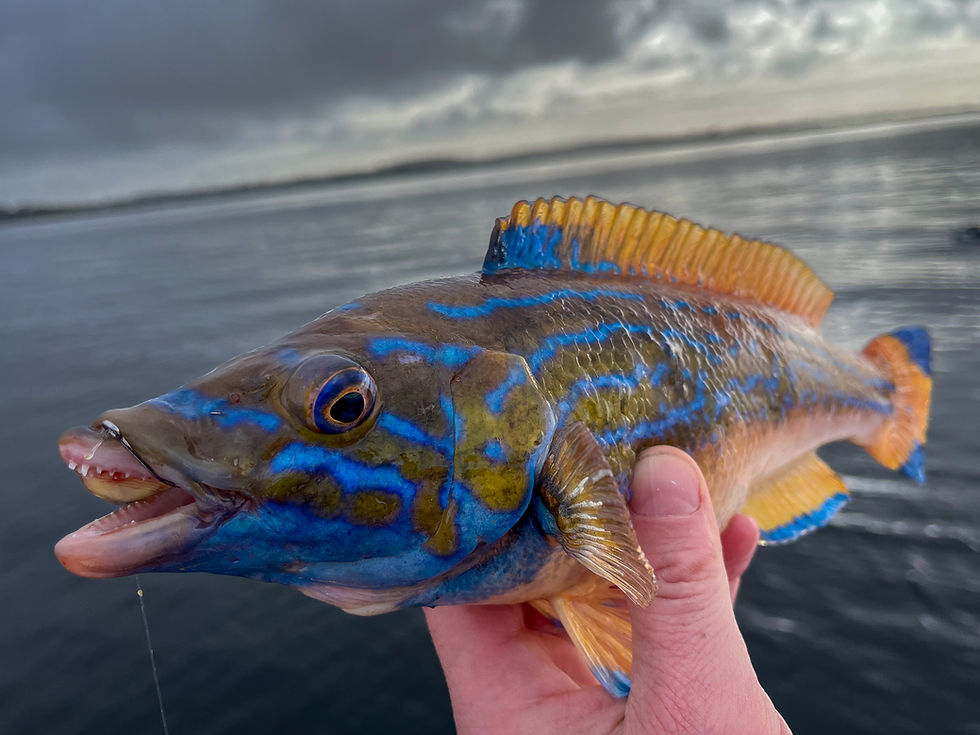
Berggylte, known internationally as ballan wrasse, represent a completely different experience. These fish are closely tied to rocky terrain and kelp-covered shallows, often in surprisingly shallow water during the warmer months.

They are territorial and strong.
When hooked, a ballan wrasse rarely runs into open water. Instead, it dives directly toward rock and kelp, using structure to its advantage. On light tackle, even a modest-sized berggylte can feel unexpectedly powerful. Controlling the first few seconds of the fight is often decisive.
In Stavanger’s fjords, berggylte are particularly active during late spring and summer when water temperatures rise. Fishing for them on shallow rocky ground can be both technical and highly engaging. It requires accurate positioning and steady pressure rather than speed.
Unlike migratory species, berggylte are resident fish. Their presence reflects the health of shallow coastal habitat - kelp forests, rocky shelves and clean water.
For many guests, encountering berggylte is a memorable surprise. It highlights how fjord fishing in Stavanger is shaped not only by open water species but also by the rich micro-environments close to shore.
Occasional Coastal Species . The Wider Fjord Ecosystem
Beyond the more commonly encountered species, Stavanger’s fjords occasionally offer additional variety depending on depth, season and current.

Ling (lange) may appear in deeper areas along steeper edges where the seabed drops more abruptly. These fish are typically associated with greater depth and structure, and while they are not everyday encounters in sheltered fjord fishing, they do reflect the connection between fjord systems and deeper coastal waters.
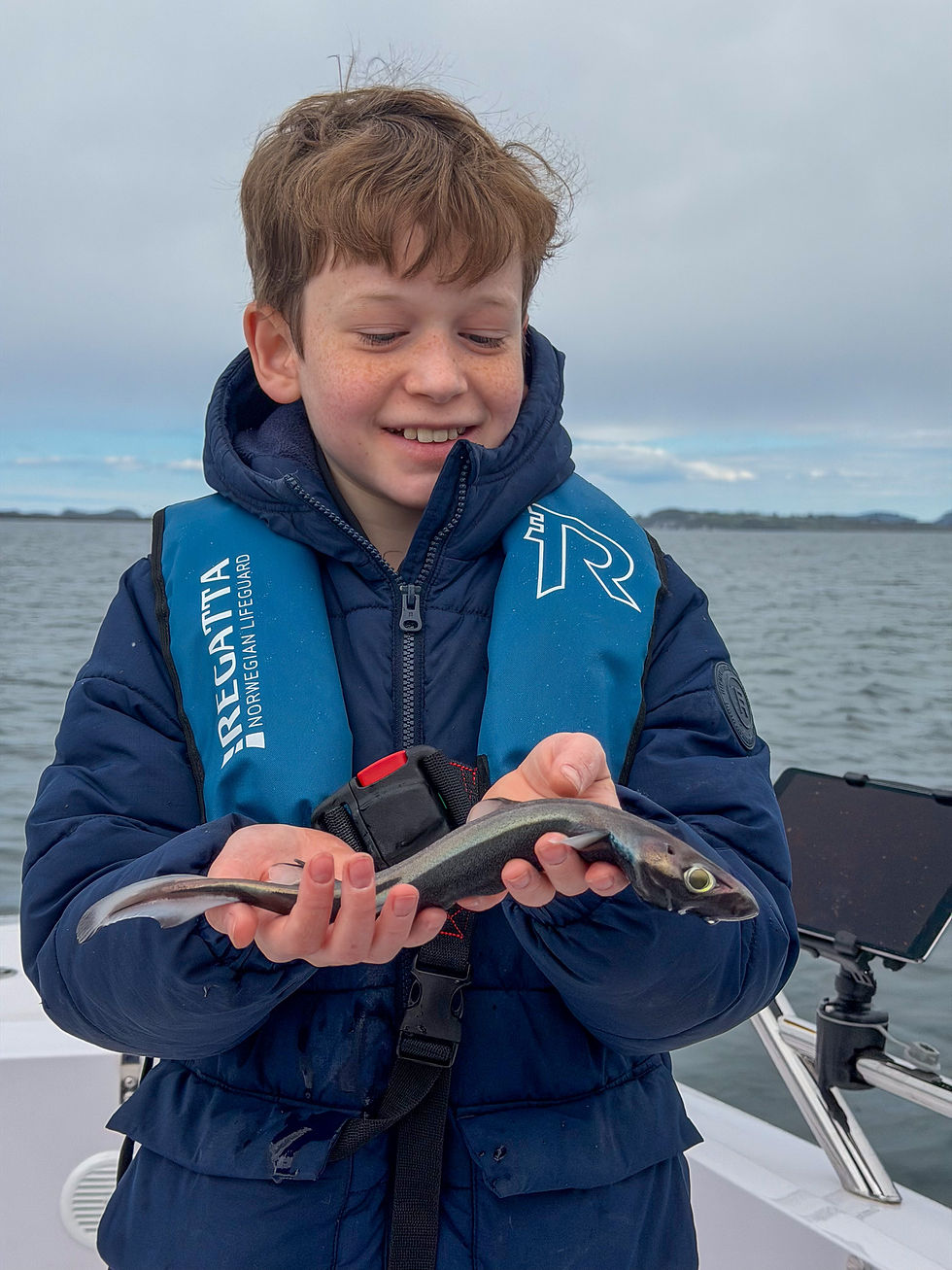
Whiting (hvitting) and haddock (hyse) can also be present, particularly in moderate depths where current and mixed seabed create feeding opportunities. Their appearance is less predictable than cod or pollack, but they are part of the broader coastal ecosystem.

Occasionally, species such as saithe in larger schools or even European hake (lysing) may be encountered depending on conditions. These are not the primary focus of fjord fishing in Stavanger, yet their presence highlights how diverse and interconnected the marine environment can be.
Encounters with these species are reminders that fjord fishing is shaped by natural variation rather than strict targeting. The sheltered waters around Stavanger are part of a larger coastal system, and that connection sometimes becomes visible on the line.
Depth and Habitat - Why Location Matters More Than Targeting
In the sheltered fjords around Stavanger, success is rarely about selecting a single species and insisting on it. It is about reading the environment.

Depth changes, seabed composition and tidal flow shape fish behaviour more than intention does.
Rocky shorelines and steep underwater edges often hold pollack and cod because these areas provide both shelter and feeding opportunity. Kelp-covered slopes and broken terrain create natural ambush zones where predatory fish position themselves close to structure.
Sandy seabeds, by contrast, tend to support flatfish and mixed coastal species. Here, the fishing rhythm slows. Subtle drift speed and careful bottom contact become more important than aggressive presentation.
Where tidal flow increases through narrow sounds or along channel edges, baitfish often gather. Even a modest increase in current can activate the entire water column. In these moments, species such as saithe or actively feeding cod may move higher in the water and become more responsive.
In Stavanger’s fjords, depth does not always mean distance from shore. Productive transitions can occur surprisingly close to land. A change from five to fifteen metres, combined with structure and moderate current, may be more influential than extreme depth.
On private fjord fishing tours in Stavanger, this understanding shapes the day. Rather than anchoring to one location, subtle repositioning between habitat types changes the probability of encountering different species. A move of a few hundred metres can shift the underwater terrain entirely.
This adaptability - reading depth, structure and current rather than chasing a species list - is one of the defining strengths of private fjord fishing compared to fixed shared formats.
Seasonal Variation in Stavanger Fjords
Fjord fishing in Stavanger is possible throughout much of the year, but seasonal shifts influence both species distribution and behaviour in subtle ways.

Spring often brings some of the most balanced conditions. As water temperatures begin to rise, fish gradually increase their activity levels. Cod may move into slightly shallower areas, and pollack often become more responsive near structure. Combined with relatively stable weather and moderate boat traffic, spring can offer calm and rewarding fishing.
Summer changes the rhythm. Longer daylight hours and warmer surface temperatures alter how fish position themselves in the water column. Mackerel often arrive during this period, adding energy and visible activity to fishing sessions. Pollack and saithe may remain active, though they sometimes hold deeper during the warmest hours of the day.
Autumn introduces another shift. Cooling water temperatures can stimulate feeding behaviour, particularly for cod. Fish may move more consistently around depth transitions and structured seabed. At the same time, weather becomes less predictable, requiring greater flexibility in planning and positioning.
Unlike northern Norway, where large seasonal migrations can dominate fishing patterns, Stavanger’s fjords reflect more gradual coastal changes. Species presence is influenced by local water temperature, baitfish movement and tidal flow rather than dramatic migratory events.
Rather than searching for a single “best” season, fjord fishing in Stavanger rewards adaptability and realistic expectations. Each period of the year offers its own rhythm.
For a more detailed breakdown of timing and seasonal conditions, see → Best Time and Seasons for Fjord Fishing Around Stavanger
Stavanger Compared to Northern Norway
It is important to distinguish fjord fishing in Stavanger from offshore or northern Norway fishing experiences, as expectations are often shaped by images from far north Atlantic waters.

Northern Norway is known for colder, nutrient-rich seas and strong seasonal migrations of species such as large cod and halibut. Fishing there often involves deeper water, longer runs offshore and a greater focus on targeting specific trophy species during peak periods.
Fjord fishing in Stavanger reflects a different coastal reality.
The fjords here are sheltered, interconnected and influenced by local tidal flow rather than dramatic migratory events. Average fish sizes are generally smaller than in the far north, and the focus is rarely on extreme volume. Instead, Stavanger’s fjord fishing offers variety, accessibility and shorter travel distances within protected waters.

This difference does not make one region better than the other. It simply reflects distinct marine environments.
In Stavanger, fishing is shaped by habitat, seasonal rhythm and adaptability rather than peak migration windows. The experience is particularly well suited to travelers who value calm surroundings, learning and a flexible pace over high-volume, trophy-focused angling.
For those comparing formats or wondering how fjord fishing fits into a broader Norwegian fishing experience, you may find helpful perspective in → Is Fjord Fishing in Norway Worth It?
Realistic Expectations on a Private Fjord Fishing Tour
Understanding what you can catch also means understanding the character of fjord fishing in Stavanger.

This is not offshore, migration-driven fishing built around peak runs and trophy targets. It unfolds within sheltered coastal waters shaped by habitat, depth transitions and tidal rhythm. Variation is part of the environment.
Some days bring steady bites along rocky edges where pollack hold close to structure. Other days reward patience on sandy bottom or deeper transitions where cod move quietly with the current. There are moments of visible activity - and there are quieter periods where subtle adjustments in depth or drift make the difference.
On a private fjord fishing tour in Stavanger, flexibility is central. Because the day is shaped around one group rather than a fixed schedule, small shifts in positioning or technique can respond to real-time conditions. The goal is not to force results, but to work with the environment.
Fjord fishing here rarely produces extremes. It produces variety, realism and understanding. The experience rewards awareness more than expectation, and adaptability more than intensity.
For many guests, this becomes the defining quality of the day. What is remembered is not only the fish caught, but the sense of reading the fjord - and moving with it rather than against it.
Frequently Asked Questions About Fish Species in Stavanger Fjords
Below are some of the most common questions about fish species, seasonal variation and private fjord fishing in Stavanger.
What fish can you catch on a private fjord fishing tour in Stavanger?
On a private fjord fishing tour in Stavanger, common species include cod, pollack (lyr), saithe, mackerel in summer, and flatfish such as flounder and plaice. You may also occasionally encounter species like ling or haddock depending on depth, habitat and conditions.
Is cod common in Stavanger fjords?
Yes. Cod are regularly encountered in Stavanger’s fjords, especially near structured seabed and depth transitions. Sizes vary naturally, and the experience is typically more about steady coastal fishing than trophy-focused catches.
When is the best time to catch mackerel in Stavanger?
Mackerel are most likely from mid- to late summer, when warmer water brings them into sheltered fjord areas around Stavanger. Timing varies slightly each year.
Are pollack common in Stavanger fjords?
Yes. Pollack are common around rocky shorelines, kelp zones and underwater structure in the Stavanger region, especially from spring through early autumn. They are known for energetic fights on light tackle.
Do fish species change by season in Stavanger?
Yes. In Stavanger’s fjords, seasonal changes in water temperature and baitfish movement influence which species are most active. Spring and autumn often bring strong cod activity, while summer increases the likelihood of mackerel and active pollack.
Are fish in Stavanger fjords smaller than in northern Norway?
On average, yes. Northern Norway often produces larger fish due to colder, nutrient-rich waters and strong migrations. Stavanger’s fjords offer more sheltered conditions, shorter travel distances and a greater focus on variety and experience.
Is fjord fishing in Stavanger good for beginners?
Yes. The sheltered waters around Stavanger, combined with a flexible pace on private tours, make the experience well suited to beginners and families.
Can you keep the fish you catch in Stavanger?
Keeping fish depends on current Norwegian regulations, including species rules, size limits and quotas. Responsible handling and respect for local regulations are always part of the experience.
Does depth matter when fishing in Stavanger fjords?
Yes. In Stavanger’s fjords, habitat and depth transitions strongly influence what you are likely to encounter. Rocky edges, sandy seabeds and areas with stronger tidal flow often produce different species.
Is fjord fishing in Stavanger mainly about catching big fish?
Not usually. Fjord fishing in Stavanger is typically about variety, habitat awareness and adapting to conditions, rather than guaranteed large fish or constant action.
Fish species in Stavanger fjords vary naturally with season, depth, habitat and tidal conditions. Private fjord fishing is less about guaranteed trophy catches and more about understanding the changing coastal environment of southwestern Norway.
Experience Fjord Fishing in Stavanger
On a private fjord fishing tour in Stavanger, the day is shaped by season, habitat and real-time conditions rather than fixed expectations. The species encountered are not selected from a list - they reflect the living coastal environment at that moment.

Fishing within sheltered fjords means working with depth transitions, subtle current and shifting light rather than chasing extremes. Some days are energetic. Others are quiet and deliberate. Both are authentic expressions of coastal fishing in southwestern Norway.
What defines fjord fishing in Stavanger is not volume, but awareness. It is the experience of reading structure, adjusting to habitat and understanding why certain species appear where they do.
If you would like a broader understanding of how private fjord fishing tours in Stavanger are structured - including safety, suitability and seasonal considerations - you can explore:
Fjord fishing here is calm without being passive, varied without being unpredictable, and personal without being staged.
What you catch is part of the story.
The environment is the rest.
Calm. Personal. Real.


Comments