Shore Fishing in Stavanger: How to Get Started and Learn with a Local Guide

Updated: Nov 2
You can stand on a beautiful stretch of Norwegian coastline, make twenty casts and not feel a single bite. Ten metres farther along, someone else catches a fish. The difference is not necessarily luck or expensive equipment. Quite often, it comes down to where the lure travels, how you retrieve it and whether you have noticed what lies beneath the surface.
That is what makes shore fishing around Stavanger interesting. You do not need a boat to get started. But learning to read the coast, choose suitable tackle and fish with some purpose makes a big difference.
I'm Espen, the local guide behind Stavanger Adventure. I grew up in Stavanger and have spent years exploring and fishing the coastal waters around the city. This guide explains the basics of saltwater fishing from shore in Norway, and what I focus on when teaching someone to fish for themselves.
If you would rather learn in person, my private Shore Fishing Course in Stavanger combines an indoor introduction with practical fishing beside the sea. It is designed around the people taking part, whether they have never held a fishing rod or simply want to improve their technique.

Can you fish from shore in Stavanger?
Yes. The Stavanger region has a varied coastline of rock ledges, sheltered bays, beaches, islands and piers. Some places give access to deeper water close to shore; others have shallow kelp beds and gently sloping seabeds. All can be interesting, but not in the same way or at the same time.
Shore fishing means fishing from land rather than from a boat. You can often keep the setup simple: a spinning rod, reel, suitable line and a few lures. The skill is in choosing a place where you can fish safely, understanding the water in front of you and presenting the lure properly.
There is no single shoreline or lure that works in every season. Wind, water clarity, depth, tide and the fish present on a particular day all matter. Learning to notice these details is more valuable than memorising a list of so-called secret fishing spots.
What fish can you catch from the shore in Stavanger?
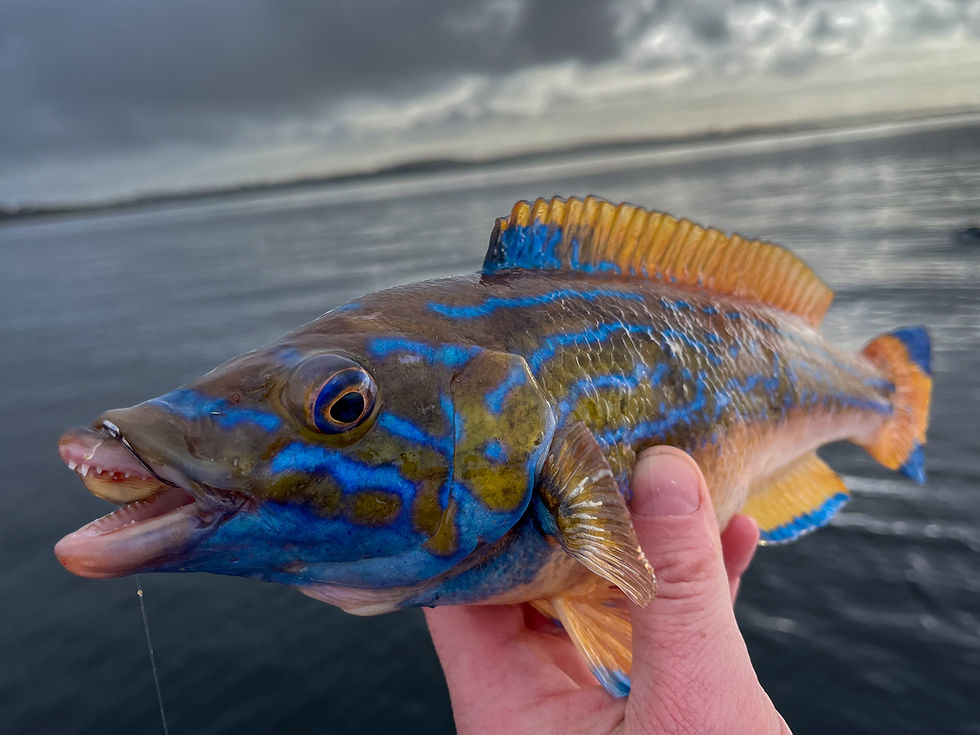
Depending on the season, location and technique, it may be possible to catch pollack (lyr), saithe or coalfish (sei), mackerel (makrell), cod (torsk) and some smaller coastal species. Flatfish can also be found over suitable sandy or mixed seabeds. Certain species are much easier to encounter in some months than others.
For example, mackerel are generally associated with the warmer part of the year, while fish along rocky edges and kelp beds may be present at other times. That does not mean every trip will produce a catch. Fish move, feeding activity changes and the weather can make a promising spot difficult to fish.
If you are curious about the different species in the area, read my guide to fish found in the Stavanger fjords. The species guide covers a wider range of habitats and includes fish commonly targeted from a boat as well as near shore.
Learning to read the coastline
Before I even think about making a cast, I look at the water. Where does a shallow shelf give way to deeper ground? Is there a patch of kelp along the edge of a rock? Is the current pushing food past a point? Are there small fish near the surface?
These signs are clues, not guarantees. But they help you make a sensible choice about where to cast and how deeply to let the lure sink.

A rocky shoreline might have a sharp drop-off just a short distance out. A sheltered bay may have sand and scattered stones. A point of land may create moving water when the tide runs. Different conditions call for different approaches.
Once you understand how to recognise structure, fishing becomes less about repeatedly casting into empty water and more about testing a spot thoughtfully. That is one of the most useful lessons you can take home and apply somewhere entirely different.
What equipment do you need for shore fishing in Norway?
You do not need a huge tackle collection to begin. For most people, a manageable spinning outfit is a good starting point. A suitable rod, reliable reel and a few practical lures are enough to learn the basics.
A typical light-to-medium saltwater setup might include:
A spinning rod and reel appropriate for the shoreline and the fish you hope to catch.
Good quality fishing line and a suitable leader.
A small selection of metal lures, soft plastics or other simple coastal presentations.
A few hooks, jig heads and basic tools for changing tackle.
Practical footwear with good grip and weatherproof outdoor clothing.
Choosing the correct lure weight matters. Too light, and you may struggle to cast or maintain contact with the lure in wind and current. Too heavy, and a shallow spot can quickly become difficult to fish without snagging the bottom.
On my course, I provide the fishing equipment for the session. I focus on understanding what each part does rather than buying more gear than you need.

Casting, retrieving and feeling the bite
A good cast is not only about distance. Accuracy, control and keeping everyone around you safe are more important when you are learning. We start with a comfortable grip, the movement of the rod and how to release the line smoothly.
Then comes the part that takes practice: retrieving the lure. Sometimes a slow, steady retrieve is effective. At other times, pauses or changes in speed work better. The important thing is knowing what your lure is doing in the water.
I also explain how to recognise a bite and distinguish it from the lure touching bottom or seaweed. With a little practice, the rod and line start telling you more about what is happening beneath the surface.
These skills are useful whether you eventually fish from a quiet jetty in Stavanger, a rocky shoreline somewhere else in Norway or from a boat.
What happens during my private Shore Fishing Course?
The Shore Fishing Course is a private four-hour introduction to practical saltwater angling. We normally meet at my base, approximately 30 minutes by car from central Stavanger, unless we agree on another arrangement in advance.
I begin indoors with the essentials: how a rod and reel work, line and tackle, simple knots, lure selection, basic fish behaviour and how to choose a sensible place to fish. There is time to ask questions and handle the equipment before going outside.
Then we head to the shoreline and put the ideas into practice. We work on casting, lure control, where to fish and how to adapt to the weather and water conditions. The pace is flexible. If something needs another explanation or a few extra attempts, we take the time.
It is a course rather than a competition to land the most fish. A catch is always exciting, of course, but the real goal is to leave with enough understanding and confidence to go fishing on your own.
You can find the full course details and send your preferred date through the Shore Fishing Course in Stavanger page.
Who is the course for?
The course is especially suitable for adults and older children who would like to learn the fundamentals of fishing from shore, as well as visitors who already have a little experience but want help with casting, tackle choices or reading different fishing spots.
Because it is private, I can adjust the level of instruction to the group. Someone holding a rod for the first time needs a different explanation from a guest who already fishes freshwater at home and wants to understand Norwegian coastal fishing.
There is no requirement to buy your own gear before joining. And there is no expectation that you should already know the Norwegian names for fish, tackle or techniques.
How is a shore fishing course different from a boat fishing tour?
Both are good ways to experience fishing in Stavanger, but they serve different purposes. Shore fishing is about learning to choose a spot and fish effectively from land. A boat allows us to reach different depths and locations, and to use sonar to understand the underwater terrain.
If your main goal is to learn skills you can use independently on a coastline, the shore fishing course makes particular sense. If you want a private guided outing exploring fishing grounds from a comfortable boat, you may prefer my Private Fishing Tour in Stavanger.
Neither option guarantees fish. They simply offer different ways to learn, explore and enjoy the local waters.
Is shore fishing in Stavanger safe?
Shore fishing is accessible, but the Norwegian coast deserves respect. Wet rock, seaweed, loose stones, waves and sudden changes in weather can make a place unsafe even when the water looks calm.
I choose the practical fishing area with footing, accessibility and the day's conditions in mind. We also cover safe casting, awareness of other people, and careful handling of hooks and fish.
Never turn your back on breaking waves on exposed shores, and do not walk onto a wet, steep rock face for the sake of a longer cast. A safer position and a shorter cast are often the better choice.
Can tourists fish in the sea in Norway?
Recreational saltwater fishing is generally possible without an ordinary fishing licence, but you still need to follow Norwegian rules. These include restrictions around protected species, minimum sizes, particular areas and fishing near river mouths. Rules can change, so always check the current information before fishing independently.
For official information, see the Norwegian Directorate of Fisheries. Freshwater fishing and salmon or sea-trout fishing may have different permit and regulatory requirements.
What should you bring to a shore fishing lesson?
I supply the fishing equipment, so you can come without owning a rod or a collection of lures. What matters most is dressing for a few hours outdoors beside the sea. I recommend sturdy shoes with good grip, a waterproof jacket, warm layers and a drink or small snack.
If you already have your own rod or tackle and would like some advice on it, we can discuss that before the course. The exact practical plan depends on the weather, conditions and who is joining.
Common questions about shore fishing in Stavanger
Do I need fishing experience to join?
No. Beginners are very welcome. The course starts with basic theory and equipment before moving to hands-on fishing.
How long is the shore fishing course?
The private course lasts approximately four hours and includes an indoor introduction followed by practical shore fishing.
Where does the course start?
We normally meet at my base, around 30 minutes by car from Stavanger city centre. I provide the meeting details when the course is arranged.
Is the fishing gear included?
Yes. I provide the equipment needed for the lesson. You should bring weather-appropriate clothing and suitable footwear.
Will we definitely catch a fish?
No. Fish are wild animals, and catches depend on nature, season and conditions. The course is designed to teach useful fishing skills whether or not the fish are biting that day.
Can I use what I learn somewhere else in Norway?
Absolutely. Casting, selecting tackle, understanding depth and reading shoreline structure are transferable skills. Local rules and conditions will still differ from place to place.
What if the weather is poor?
We adapt the practical part to the conditions where possible. If the weather makes shore fishing unsuitable, I will discuss a change of plan or another date rather than push ahead regardless.
A more useful way to experience Norway's coast
Catching a fish is a lovely moment. But being able to look at an unfamiliar stretch of shoreline and understand why it might be worth fishing is even better. That knowledge stays with you after the holiday is over.
If you want to learn the fundamentals with personal guidance, have a look at my private Shore Fishing Course near Stavanger. Tell me about your experience, who is joining and when you would like to come. I will help you decide whether it is a good fit.
— Espen, Stavanger Adventure
Comments