Flounder Fishing in Norway – A Calm, Underrated and Surprisingly Exciting Experience

Updated: Apr 23
Flounder fishing in Norway offers a calm, technical, and surprisingly rewarding way to experience the fjords - yet it remains one of the most overlooked types of fishing along the Norwegian coast.

When people think about fishing in Norway, they often imagine cod, halibut, or deep-sea fishing far offshore. But in sheltered fjord environments, targeting flatfish such as plaice, flounder, turbot, and brill provides a completely different kind of experience - one that is slower, more precise, and deeply connected to the seabed and surroundings.
In the fjords around Stavanger, these conditions come together in a way that makes flounder fishing especially accessible, relaxed, and engaging - even for those with little or no previous fishing experience.
This guide explains how flounder fishing works in Norwegian fjords, when the conditions are best, and why it has become one of the most underrated fishing experiences in the Stavanger region.
For a broader understanding of how fjord fishing works in this region, you can also explore The Ultimate Guide to Fjord Fishing in Stavanger.
Why flounder fishing is so underrated in Norway
In countries like Denmark and Sweden, flounder fishing has long traditions and a strong following among recreational anglers. In Norway, however, it remains surprisingly overlooked - despite having some of the most suitable natural conditions for it.

Along the Norwegian coastline, and especially in sheltered fjords, the environment is ideal for flatfish. Large areas of sandy and mixed seabed create perfect habitats, while calm waters with minimal swell allow for precise and controlled fishing using light tackle.
Seasonal patterns also play an important role. During spring, many flatfish species move into shallower fjord areas, making them more accessible and creating excellent conditions for this type of fishing.
What makes this even more interesting is how well these conditions align with a calm, learning-focused fishing experience. The combination of stable water, clear structure on the seabed, and predictable fish behavior makes flounder fishing both accessible for beginners and engaging for more experienced anglers.
For those unfamiliar with how seabed, depth, and conditions influence fish behavior, this becomes a key part of the experience. You can explore this further in How Fish Are Located in the Stavanger Fjords.
Once people try flounder fishing in the right conditions, they are often surprised by how technical, subtle, and rewarding it actually is.
What makes flounder fishing special
Flounder fishing is often described as quiet - but it is far from passive.
Unlike more aggressive forms of fishing, where strikes are obvious and fast, flatfish feed cautiously along the seabed. Bites can be subtle, sometimes no more than a slight movement in the rod tip or a gentle change in tension.

This means success depends less on strength or speed, and more on awareness and timing. Reading small signals, understanding when to set the hook, and recognizing how the fish interacts with the seabed all become part of the experience.
Because of this, flounder fishing often feels more engaging than people expect. It requires attention, patience, and a sense of connection to what is happening below the surface.
When you do hook into a good plaice or turbot, the contrast is immediate. What started as a subtle bite turns into a surprisingly powerful and determined fight - something many first-time anglers do not expect from a flatfish.
The best time for flounder fishing in Norway
Spring is widely considered the prime season for flounder fishing in Norway, especially in sheltered fjord environments.
As water temperatures begin to rise after winter, many flatfish species move into shallower areas to feed. In the fjords around Stavanger, this typically means sandy bays, fjord arms, and gently sloping seabeds closer to land - areas that warm up faster and naturally attract baitfish and bottom-dwelling prey.
These seasonal movements make flounder more accessible and create ideal conditions for light tackle fishing. At the same time, spring often brings longer daylight hours and generally calmer weather, allowing for a more relaxed and predictable experience on the water.
This combination of stable conditions, active fish, and accessible fishing grounds is what makes spring particularly well suited for this type of fishing - especially for those who are new to fjord fishing or want a calm and controlled experience.
If you would like to understand how seasonal changes influence fishing conditions more broadly, you can read our guide to the best time of year for fjord fishing in Stavanger.
How flounder fishing works in the fjords
Flounder fishing in Norwegian fjords is a form of light bottom fishing, where success depends on understanding how fish interact with the seabed rather than covering large areas or using heavy equipment.
In the fjords around Stavanger, this type of fishing is typically done from a slowly drifting boat. The drift allows the bait to move naturally along the bottom, closely imitating how food behaves in the current. This natural presentation is often the key to triggering bites from cautious flatfish.
The speed and direction of the drift are constantly assessed. If the boat moves too quickly, it becomes difficult to maintain contact with the seabed and detect subtle bites. In these situations, anchoring can be more effective, allowing for a more controlled presentation in a specific area.
A central part of flounder fishing is understanding where to fish. Flatfish are strongly connected to the structure of the seabed, and certain environments consistently hold more fish than others.
In practice, this means focusing on areas such as sandy or mixed bottoms, where fish can feed and camouflage themselves, as well as gentle depth transitions where the seabed changes gradually. These transitions often act as natural feeding zones, where currents bring in food and concentrate activity.
These are the same types of structures explained in more detail in How Fish Are Located in the Stavanger Fjords, where depth, bottom composition, and fish-holding areas are described more broadly.
Another important factor is identifying where food naturally collects. Slight depressions, edges, or subtle variations in the seabed can create small “holding areas” where flatfish gather. Once fish are located in these zones, it is common to find multiple fish in the same area rather than isolated individuals.
Because bites are often subtle, maintaining contact with the bait and reading small changes in movement is essential. This is where the calm conditions of the fjord become a major advantage, allowing for precise control and a much clearer connection to what is happening below the surface.
Why flounder fishing fits perfectly with a fjord experience
Flounder fishing fits naturally into the rhythm of the fjord. Unlike more fast-paced or offshore fishing styles, this type of fishing is slow, controlled, and closely connected to the surroundings. The calm conditions, sheltered waters, and steady pace create an experience that feels as much about being present in the landscape as it is about fishing itself.
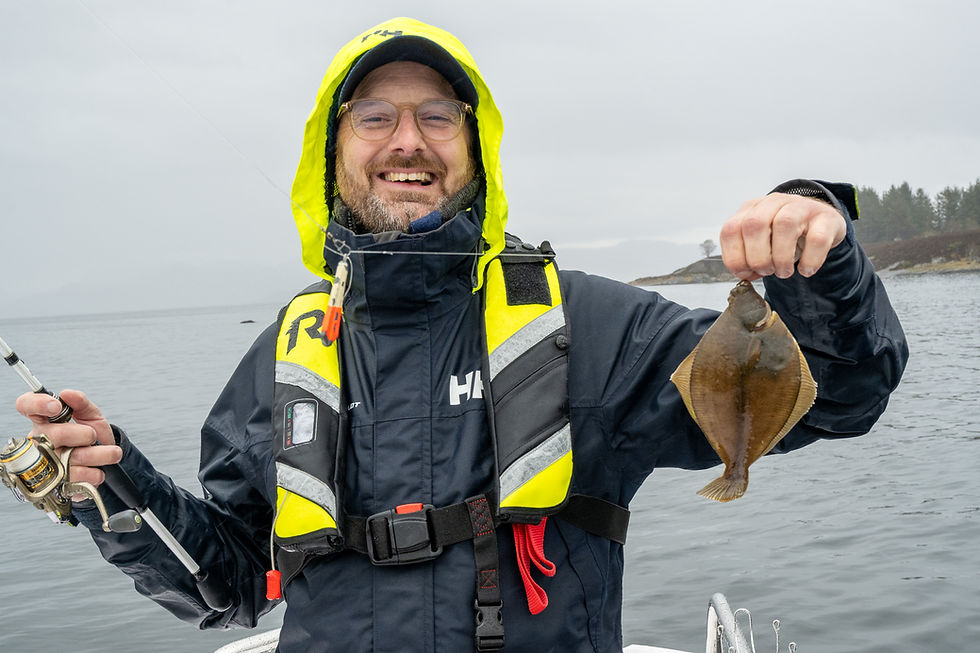
Rather than constant action, the experience unfolds gradually. There is time between bites - time to observe the fjord, follow the subtle changes in the water, and understand what is happening below the surface. This creates a different kind of engagement, where learning and awareness become part of the experience.
For many, this is exactly what they are looking for: a calm and unhurried activity, scenic fjord surroundings, and a more thoughtful approach to fishing where guidance and understanding matter more than speed or volume.
Because of this, flounder fishing works particularly well as part of a broader fjord experience. It can be combined naturally with light fjord fishing, short movements between locations, and time spent simply taking in the landscape.
This is why flounder fishing is often included in our longer private fjord fishing tours in Stavanger, where there is enough time to both fish and experience the fjord without rushing.
Flounder fishing as food fishing
From fjord to pan, flounder is considered one of the finest eating fish in Norway.

One of the most rewarding aspects of flounder fishing is not just the experience itself, but the quality of the fish. Flatfish such as plaice, turbot, and brill are widely regarded as delicacies across Europe, known for their firm texture, clean flavor, and versatility in the kitchen.
In the fjords around Stavanger, these species benefit from cold, clean water and a natural diet, resulting in high-quality fish with a mild and refined taste.
Even smaller flounder species can provide excellent meals when prepared properly -something that often surprises first-time anglers. For many guests, this adds an extra dimension to the experience, where the connection between catching and eating becomes part of the story.
If you are interested in how different species are typically caught and experienced in the fjords, you can explore What You Can Catch Fjord Fishing in Stavanger.
A different kind of fishing experience
Flounder fishing in Norway is not about chasing trophies or pushing through rough conditions.
It is a slower and more deliberate way of fishing, where precision matters more than power, and where calm conditions allow you to stay connected to what is happening below the surface.
Rather than constant movement or fast action, the experience is shaped by attention and awareness. Small signals, subtle changes, and an understanding of the environment become more important than speed or strength. This creates a different kind of engagement - one that rewards patience, curiosity, and presence.
For many, this is exactly what makes flounder fishing so memorable. What may seem quiet at first quickly becomes absorbing, as you begin to understand the rhythm of the fjord and how everything connects beneath the surface.
Common Questions About Flounder Fishing in Norway
Flounder fishing in Norway raises many questions, especially since it is still less known compared to other types of fishing. Below you will find clear and practical answers to the most common questions — from where to find flounder to when conditions are at their best in the Stavanger region.
What is flounder fishing in Norway?
Flounder fishing in Norway focuses on flatfish species such as plaice, flounder, turbot and brill, typically caught in calm fjord and coastal waters over sandy or mixed seabeds. It is a quiet and technical style of fishing well suited for sheltered environments.
Is flounder fishing common in Norway?
Yes, flounder fishing has long traditions in Norway and the wider Nordic region. While it is less visible than cod fishing, it is widely practiced by local anglers and highly regarded for both sport and food.
Where do you find flounder when fishing in Norway?
Flounder are most commonly found on sandy or gently sloping seabeds, often near drop-offs, eelgrass areas or zones where currents bring food. Fjords with mixed bottom structure are particularly productive.
When is the best season for flounder fishing in Norway?
Spring through early autumn is generally the best period. Rising water temperatures and increased baitfish activity bring flatfish closer to accessible fishing depths, especially in fjords and sheltered coastal areas.
Is flounder fishing suitable for beginners?
Yes. Flounder fishing is calm, accessible, and well suited for beginners. The techniques are simple to learn, the gear is light, and the sheltered fjord environment allows for a relaxed learning experience. If you want a broader introduction, you can also read Is Fjord Fishing in Stavanger Suitable for Beginners?
Do you usually catch a lot of fish flounder fishing?
Catch rates vary naturally depending on conditions, location and season. Some days offer steady action, while others are quieter. Flounder fishing rewards patience, technique and understanding of the seabed rather than speed or volume.
Is flounder fishing mainly about food or experience?
Both. Flatfish such as plaice and turbot are highly valued eating fish, but many anglers appreciate flounder fishing just as much for its calm pace, technical approach and close connection to the fjord environment.
How is flounder fishing different from offshore fishing in Norway?
Flounder fishing takes place in sheltered waters using light tackle, focusing on seabed structure and subtle presentation. Offshore fishing often involves heavier gear, deeper water, and a more weather-dependent approach. You can read more about these broader conditions in The Ultimate Guide to Fjord Fishing in Stavanger.
Why is flounder fishing considered underrated?
Because it lacks dramatic visuals and fast action, flounder fishing is often overlooked. Those who try it often discover a highly engaging and rewarding form of fishing that combines technique, calm surroundings and excellent table quality.
Is flounder fishing in southern Norway worth it?
Yes - flounder fishing in southern Norway is well worth it, especially in sheltered fjord areas like those around Stavanger.
While it may not have the same reputation as offshore cod or halibut fishing, it offers a completely different kind of experience. The calm conditions, accessible fishing grounds, and technical nature of flatfish fishing make it both engaging and relaxing at the same time.
In the fjords of southern Norway, sandy seabeds, gentle depth transitions, and seasonal movements create excellent conditions for species like plaice, flounder, turbot, and brill. This makes the fishing both consistent and well suited for beginners as well as more experienced anglers.
For many, the real value lies not just in the catch, but in the overall experience - a slower pace, close connection to the environment, and the opportunity to learn how fishing works beneath the surface.
If you would like a broader perspective on what makes this type of fishing worth doing, you can read Is Fjord Fishing in Norway Worth It?
If you are curious about experiencing flounder fishing for yourself, the best way to understand it is to spend time on the water under the right conditions. On a private fjord fishing tour in Stavanger, you get a calm, personal introduction to this unique type of fishing — guided at your pace and adapted to your level.
Join a private fishing tour in Stavanger
On private fishing tours with Stavanger Adventure, flounder fishing is often included as part of the experience when conditions are right.

Each tour is designed to be calm, personal, and adapted to your level, interests, and pace. Whether you are completely new to fishing or simply looking for a relaxed day on the fjord, the experience is structured to feel comfortable and unhurried from start to finish.
The focus is always on sheltered fjord waters, quality fishing time, and understanding what is happening below the surface - not on rushing between locations or maximizing catch numbers.
We offer 3-, 5-, and 7-hour private fjord fishing tours, where targeted fishing is naturally combined with scenic fjord cruising and insight into the underwater landscape.
If you are curious about flounder fishing in Norway and would like to experience it in the right conditions, you can explore our private fjord fishing tours in Stavanger or learn more about the guide behind Stavanger Adventure.
For a broader understanding of what fjord fishing in Stavanger involves - including species, seasons, safety, and expectations - you can also read The Ultimate Guide to Fjord Fishing in Stavanger.
Calm. Personal. Real.


Comments